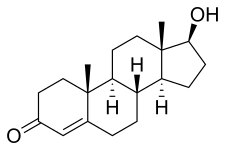
Progesterone is a steroid hormone derived from cholesterol and is involved in the menstrual cycle, pregnancy and development of embryo post-fertilization. It is the base for making certain estrogen and androgens. In animals, it is produced by their body mainly during the second half of the menstrual cycle. During pregnancy, it is produced in higher quantities. The name Progesterone is based on Progestational Steroidal ketone.

Progesterone is released as the egg travels through the fallopian tube during ovulation. It is secreted by a temporary gland formed within the ovary named the corpus luteum. It helps the body to prepare for pregnancy by causing the uterine lining to thicken. If a woman is not pregnant, the corpus luteum disappears followed by menstruation.
If a woman is pregnant, the pregnancy will trigger high levels of estrogen and progesterone, which prevent further eggs from maturing. Progesterone is secreted to prevent uterine contractions that may disturb the growing embryo. The hormone also prepares the breasts for lactation. Along with estrogen, it forms the backbone of the female reproductive system. Many oral contraceptives contain progesterone to prevent pregnancy to thicken the uterine wall and tricking the body to believe that fertilization has already occurred when in fact it has not.

Progesterone converts the endometrium to a secretory stage and prepares the uterus for implantation. It essentially works against the effect of estrogen. Fall in progesterone levels is what enables labor pain and also triggers milk production after delivery. The same is responsible for onset of menstruation.
Many other effects of progesterone are:
Source:
https://www.britannica.com/science/progesterone
https://www.endocrineweb.com/endocrinology/overview-ovaries
https://en.wikipedia.org/wiki/Progesterone
If a woman is pregnant, the pregnancy will trigger high levels of estrogen and progesterone, which prevent further eggs from maturing. Progesterone is secreted to prevent uterine contractions that may disturb the growing embryo. The hormone also prepares the breasts for lactation. Along with estrogen, it forms the backbone of the female reproductive system. Many oral contraceptives contain progesterone to prevent pregnancy to thicken the uterine wall and tricking the body to believe that fertilization has already occurred when in fact it has not.
Progesterone converts the endometrium to a secretory stage and prepares the uterus for implantation. It essentially works against the effect of estrogen. Fall in progesterone levels is what enables labor pain and also triggers milk production after delivery. The same is responsible for onset of menstruation.
Many other effects of progesterone are:
- Increasing irritability during pregnancy
- Increase in core temperature during ovulation
- Reduces spasm and muscle response and acts as an anti-inflammatory agent.
- Prevents endometrial cancer by regulating effects of excess estrogen
- Helps in blood clotting
Source:
https://www.britannica.com/science/progesterone
https://www.endocrineweb.com/endocrinology/overview-ovaries
https://en.wikipedia.org/wiki/Progesterone



No comments:
Post a Comment